
Eyelid & Periocular Melanoma
The most dangerous skin cancer around the eye — the ABCDE warning signs, and why early diagnosis and complete excision are critical.
Medically reviewed by EyePlastics Medical Editorial BoardASOPRS oculoplastic surgeonsLast updated June 2026
Part of our complete guide to Eyelid Skin Tumors — this page covers eyelid melanoma in depth.
Melanoma
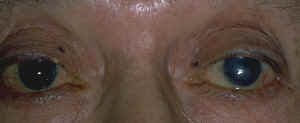
Cutaneous melanoma of the eyelid is rare, accounting for ~1% of eyelid malignancies, but carries the highest mortality of all periocular skin cancers. It arises from melanocytes in the epidermis and may occur de novo or within a pre-existing nevus. The most common subtype on the eyelid is lentigo maligna melanoma (arising in a slowly enlarging, irregularly pigmented macule in sun-damaged skin of older patients), followed by superficial spreading and nodular melanoma.
Diagnosis: The “ABCDE” criteria apply: Asymmetry, Border irregularity, Color variation (multiple shades of brown, black, red, or white), Diameter >6 mm (though melanoma can be smaller), and Evolution (change over time). Amelanotic melanoma lacks pigment and can mimic BCC or SCC — a high index of suspicion is required. Dermoscopy aids clinical assessment. Incisional or excisional biopsy with pathologic staging (Breslow depth, Clark level, mitotic rate, ulceration) is required before definitive surgery.
Treatment: Wide local excision with 5–10 mm margins (depending on Breslow depth) and sentinel lymph node biopsy for lesions >0.8 mm or with high-risk features. Lentigo maligna at the lid margin presents a reconstructive challenge because adequate margins may require full-thickness eyelid excision. Adjuvant systemic therapy (BRAF/MEK inhibitors for BRAF-mutant melanoma, anti-PD-1 immunotherapy) is used for high-risk or metastatic disease.
Frequently Asked Questions
- What does an eyelid melanoma look like?
- Watch for the ABCDEs — Asymmetry, irregular Borders, multiple Colors, Diameter over ~6 mm, and Evolution (change over time) — in any pigmented eyelid lesion. Any such lesion should be evaluated promptly.
Find a Specialist
Connect with a board-certified oculoplastic surgeon who specializes in eyelid & periocular melanoma.
Search the Directory →